
Free Marketing Tools
There are so many marketing technologies on the market that it can sometimes be difficult to pick the best tools for your company out of the hundreds that are available.
“How can I choose the best tools to help me expand my business?”
“Which tool is best for growing my company’s clientele?”
These are just some of the questions you might’ve asked yourself as a founder or small business owner. You might have even spent hours looking for the right answers.
Startups, especially in the early stages, require a solid toolbox of marketing tools to support expansion while keeping costs to a minimum. As a result, we’ve curated a list of a free and freemium tool you can use to help your startup or business expand.
Conversations about SA owned COVID19 Vaccine Brand
Aspen Pharmacare Holdings Ltd. is in talks with Johnson & Johnson about a license that would mean Africa’s biggest drugmaker could make its own-branded Covid-19 vaccine.
The discussions are underway as the African Union and European Union look to bolster the supply of coronavirus doses to the continent, and could extend an existing agreement for Aspen to package and fill vials of the U.S. company’s vaccine at a plant in South Africa.
Aspen has capacity to manufacture as many as 300 million doses of the J&J shot and plans to increase that over time to more than 700 million by January 2023. African nations trail more developed countries on coronavirus inoculations, raising the risk of the emergence of dangerous new variants.
A license would enable Aspen to decide on the recipient of the doses it produces, Chief Executive Officer Stephen Saad said in an interview on Thursday. The two companies are still negotiating several aspects of the deal such as fees and legal liabilities and Aspen would need to gain certain regulatory approvals, he said.
“Access for Africa is a critical point, so hopefully we can get regulators to move quickly,” Saad said. “We’ve had incredible support from the African Union saying they are tired of being at the back end of the queue.”
Aspen shares rose 6.3% as of 3:36 p.m. in Johannesburg, and are trading at a three-year high. The stock has climbed more than 60% this year.
Aspen switched focus to producing so-called steriles such as anesthetics a few years ago to tap a higher-value market than its traditional generic medicines, paving the way for a push into vaccines.
Reporting earnings after the market closed on Wednesday, the Durban, South Africa-based company resumed paying dividends after a two-year pause.
The drugmaker also slashed its debt to 16.3 billion rand ($1.1 billion) as of the end of June, from 35.2 billion rand a year earlier, following the sale of the European thrombosis business.
Take Full Advantage of Business Directories With These 5 Tips
Business directories offer consumers a centralized location for finding businesses like yours. Whether they’re looking to find a plumber, try a new restaurant, or add a new stop to their late-night bar crawls, consumers turn to online local listings every day to address a myriad of needs.
How do they get to these listings? According to a Google study on local search behavior, an overwhelming 4 out of 5 consumers use search engines to find local information on businesses—store address, business hours, product availability, and so on. The same study notes that consumers also take action, with half (50%) of them visiting a store within one day after searching on their smartphone.
So, if you want to increase your organic reach and have your business show up in these local searches, you’ll need to create several business listings across various directories. But first, there are a few things you need to know. Check out the tips below to get started.
5 Must-Know Tips for Online Business Listing Sites
1. Find the most suitable online directories for your business.
In an ideal world, your business name would appear everywhere a customer could possibly search. But as a small business owner wearing multiple hats, you have limited time. Hunting down and completing a profile for every available business directory just isn’t feasible.
A compromise between maximum organic reach and zero local SEO is creating online listings on only the most suitable directories. You can think of suitable in two different ways: popularity and relevance. Popular directories are widely used and have a lot of traffic, such as Google, Geo Direct and Yelp. Relevant directories might be ones specific to your industry (e.g., restaurant) or the type of services you offer (e.g., accounting).

2. Add as much information as possible to each directory.
Once you’ve identified where you want to list your business, you need to figure out what you plan on sharing about it. Recall the Google study mentioned previously—consumers want to know at least the basics. So, at a minimum, each local business listing should include your website, business address, phone number, and hours of operation. Customers should be able to contact and locate you easily and know when they can show up to shop.
Beyond the basics, you’ll want to craft a compelling description of your business that gives would-be customers a reason to reach out or visit. Be clear on the products and services you offer, as the chances are low that customers will call to inquire about what you sell. They’re more likely to just move on to the next listing.
Keep in mind that the more descriptive you are, the greater chance you have of showing up in consumer searches. For example, consumers may be searching for “authentic quesadillas near me.” Assuming your business is a Mexican restaurant, your description is likely to already show up on Google’s radar. However, you may increase the chance of appearing in search engine listings if you include details about your authentic quesadillas (and how much customers love them).
3. Create a special offer for would-be customers.
A great description may pique someone’s interest, but if you want to seal the deal, try offering a special discount or coupon. It doesn’t have to be anything grand. You just want to give readers an extra nudge to choose your business over others. For example, you could offer 10% off their first purchase or a free dessert.
If you’re using voucher codes in your offer, you can create a different code for each directory. That way, you can track where most of your traffic is coming from. You may find that more customers are coming from an industry- or service-specific directory than the popular listing platforms.

4. Keep business information up to date.
Your job isn’t done when you’ve created your local directory listings. After all, these aren’t just static assets; they’re dynamic portals where customers can learn more about you and influence other customers. (You’ll learn more about this influence in the next tip.) That’s why it’s essential to monitor and update your listings as a regular part of doing business.
If you change (or add) locations, business numbers, a website, or other contact information, be sure to update all your listings accordingly. The last thing you want is potential customers calling an out-of-service number or, even worse, showing up to a closed-down building. Not only can this make you lose out on customers—but it can also damage your business reputation.
5. Manage customer reviews carefully.
A key part of most directories is online customer reviews. As a business owner, you’ll face both positive reviews and negative reviews. Naturally, you want reviews to skew largely toward the positive so you can maintain a good business reputation. Otherwise, you could make customers apprehensive—a 2020 BrightLocal survey found that less than half (48%) of consumers would consider using a business with fewer than four stars.
But negative reviews also have their place. A few less-than-stellar comments from customers can help make your business listing more authentic. Here’s why: The same BrightLocal study found that the second-highest review factor consumers care most about was the legitimacy of reviews, or how real they were.
The above tips can help you take full advantage of business directories and increase the chance consumers see your business in search engine listings. This can increase traffic and, subsequently, your bottom line.
But you don’t have to create and manage your business listings by yourself. Get a helping hand and take control of your online presence across more than 70 business directories with Localworks, a local listing tool. Localworks is local listing management made simple. Ensure your customers have the most up-to-date information about your business, regardless of where they search. You can even get insights into how visitors interact with your business listings, then make informed business decisions from what you discover.
Source: https://geodirect.co.za/take-full-advantage-of-business-directories-with-these-tips/

Thuma Wallet
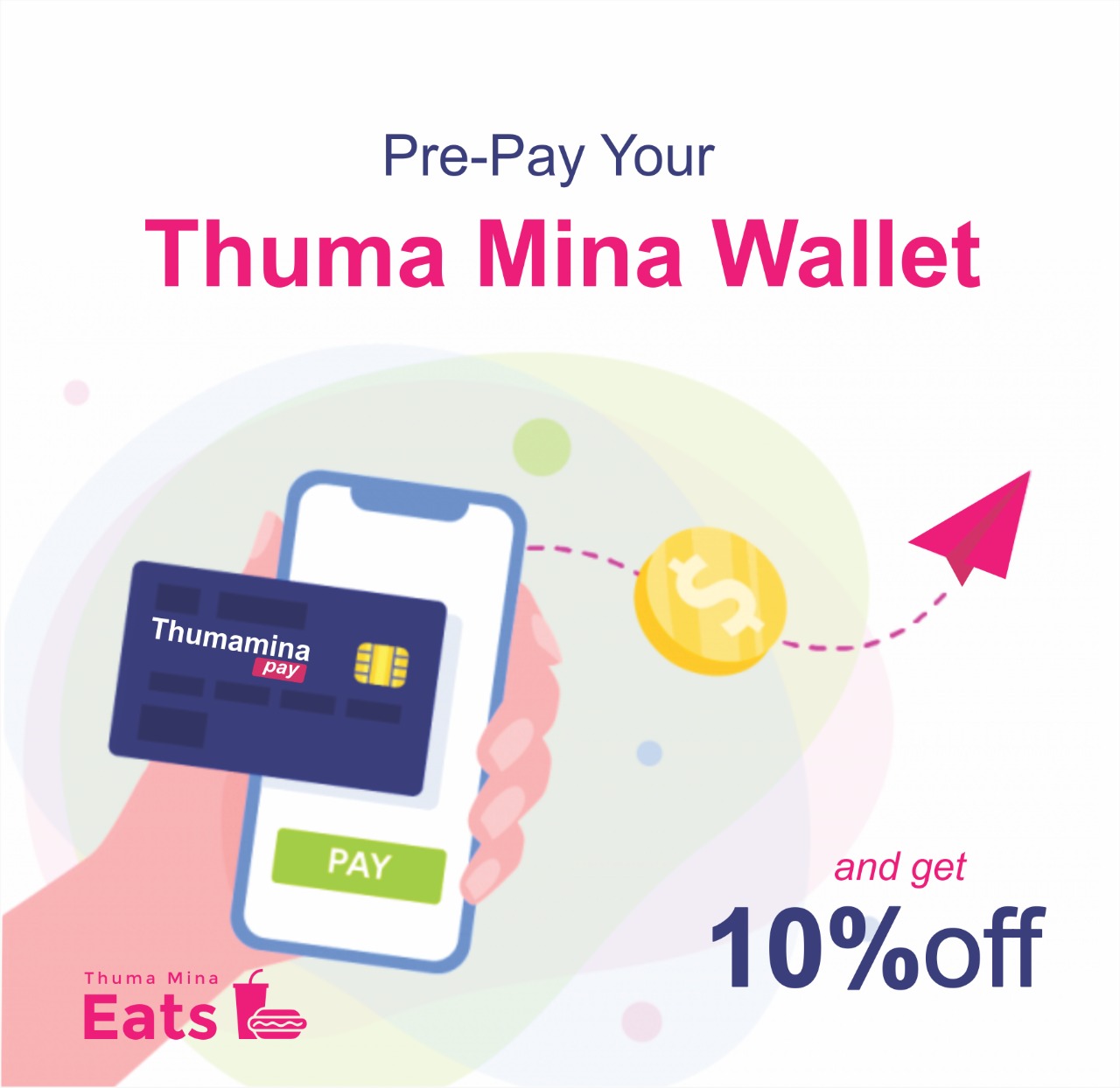
Use your Thuma wallet to control your monthly spend and qualify for discounts up to 10% off!
- Set up your daily, weekly or monthly budgets by making use of the Thuma wallet!
- Prepay for wallet access
- Track and control your spending.
- Pay less on transactional fees as you use!
- Qualify for discounts across your app.
- Enjoy ZERO payments hassels !
- Get an EXTRA 10% Added
POPIA is here! How does it affect your telephonically ?
On 1 July, the Protection of Personal Information Act (POPIA) came into full effect.
Any organisations found to be in breach of the act will be liable for fines and even criminal prosecution.
It has been a long road to POPIA’s eventual implementation and most organisations should be compliant by now.
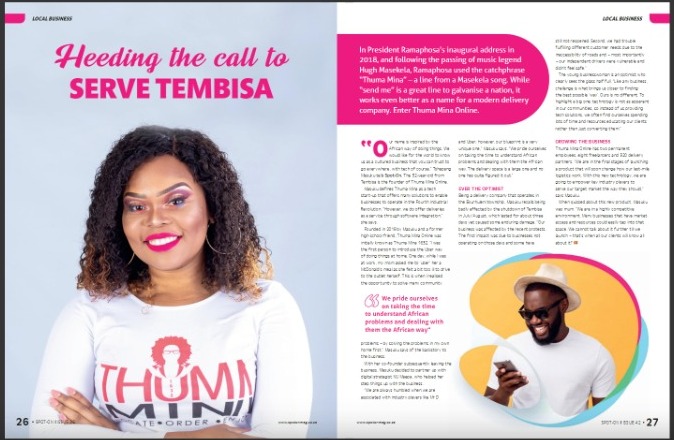
Here, Thuma Mina Online shares a few points that concerned organisations and call centres should be considering.
POPIA can be beneficial
“Before you panic about how big the impact of POPIA is, remember that compliance can be of immense value to your business,” says Euphoria Telecom CEO John Woollam.
“Compliance reassures your customer base of your commitment to their privacy and to the ethical management of their data.
“This goes a long way towards cementing your reputation as a trusted company, and to ensuring that future communication is always aligned with regulation and compliance mandates.
In addition, direct marketing is already regulated by the Electronic Communications and Transactions Act 25 of 2002, the Consumer Protection Act 68 of 2008, and the National Credit Act 34 of 2005.
“All that POPIA does is pull all these threads together to ensure that customers are protected, but also to ensure that you are protected.
It doesn’t prevent you from selling or cold calling, it just changes how you approach it and what methods you use to achieve your sales goals.”
Understand data and electronic communication
The term “electronic communication” is mentioned extensively in POPIA, and understanding the broader communication methods this covers is essential.
What it refers to is any image message, text, SMS, voice note, sound or form of communication with a customer via an electronic communication network or device.
Unsolicited electronic communication in any of these forms is prohibited, unless the person is already on your database as an existing customer; has provided consent to receive direct marketing and your organisation received that consent in the right manner and form; and if the customer hasn’t withheld consent in the past.
A clear understanding of the data you possess is a very important extension of using electronic communication channels compliantly.
You cannot effectively protect customer data in line with POPIA if you don’t accurately document the categories of data subjects (including HR, sales, and marketing) within your company and describe the personal information that is processed for each.
Using the categories of data subjects you’ve defined, you can map the flow of personal information within your business, including external parties that have access to that information.
Stay on the right side of cold calling
Cold calling is a divisive subject and there are some questions around whether or not it falls under the POPIA mandate, or if it is even allowed as it uses personal communication to engage with potential customers.
The bottom line is, organisations are still required to obey the mandates outlined by the Consumer Protection Act 68 of 2008, and customers still have the right to stop cold callers from engaging with them.
Any consumer requests to prevent cold calling must be respected as the law is on the consumer’s side in this regard, not the business.
The best way to connect with customers using cold calling is to ensure that your approaches are aligned with regulations.
This means that your potential customers have to opt into your communication by providing consent before you can engage with them using any form of electronic communication.
This opt-in function is extremely valuable and including it on your marketing collateral can ensure that the customer engagement pipeline stays clear.
Privacy matters
POPIA can potentially offer your organisation an opportunity to deliver better customer experiences and services.
With the required data privacy team on board at your company, compliance can be smoothly maintained when representatives from each data subject category, and from functional areas – such as technology, operations and information security – are engaged as part of the process.
It’s important to note that compliance is not a once-off “cut and paste” solution.
It is an ongoing effort that requires constant evaluation of the procedures, staff, software, and technology within your company.
Alcohol ban in South Africa #Level4 adj.
South African Breweries (SAB), the National Liquor Traders Council, and the Beer Association of South Africa have taken a front-page wrap advertisement in the Sunday Times to slam the government’s decision to implement another alcohol ban.
The ban was implemented as part of the adjusted level 4 lockdown measures amid a surge of new Covid-19 cases due to the outbreak of the more dangerous Delta variant in South Africa.
“Dear National Coronavirus Command Council, give them an explanation that their families will understand”, the advertisement reads, followed by a long list of taverns across South Africa that were forced to close.
“These are just some of the 45,000 taverns across South Africa — compound that number by the families and communities that rely on them and begin to see the gravity of the impact of the latest alcohol ban,” the ad stated.
“Some of the taverns listed above barely survived the three previous bans. Others weren’t as fortunate.”
The industry representatives said these taverners could no longer support themselves because the NCCC “closed the tap on their income”.
“Now, there will be more hands out and more mouths to feed. What will these people tell their families, their workers, their communities? What will happen to the 1 million jobs impacted by this?”
The organisations stated that they were never against safer and more responsible alcohol sales, and had even proposed and implemented their own.
However, they accused the government of not consulting with them to collaborate on solutions.
“There are no economic support measures, no understanding of when these new restrictions will end, and no vaccine,” the ad stated.
It concluded with a call on the government to join the industry in establishing reasonable initiatives that can “help save lives and livelihoods”.
President Cyril Ramaphosa said that the alcohol ban is necessary to reduce the number of trauma cases in hospitals to ensure there are enough beds for Covid-19 patients.
He explained that measures implemented during lockdown alert level 3 did not appear to make a difference to trauma cases and that stricter rules were needed.
During alert level 3, liquor stores were only allowed to sell alcohol between 10:00 and 18:00 from Monday to Thursday, while restaurants and taverns were allowed to sell alcohol for on-site consumption.
City Press reported that 91% of private and public hospital beds in Gauteng are currently full while the coronavirus cases in the province continue to rise.
The National Institute for Communicable Diseases reported yesterday that South Africa’s daily new Covid-19 cases surged to a record 26,485 on Friday, with 16,091 of these cases recorded in Gauteng.
“I know that we have grown impatient with the constraints that have been placed on our lives,” Ramaphosa said when he announced the adjusted alert level 3 lockdown on 15 June.
“I fully understand that you are all concerned about constraints that restrict your freedom to move around or to travel; your freedom to gather, to socialise, to worship; and, in some instances, your freedom to even earn a living,” he said.
“Yet we also know that these restrictions have been effective in containing the spread of the virus.”
Support for South Africa’s alcohol ban to reduce trauma cases in hospitals is contained in a study by the Australasian Professional Society on Alcohol and other Drugs, funded by the South African Medical Research Council.
It compared data on trauma admissions, operations, and stab wound admissions from the Worcester Regional Hospital between 2019 and 2020.
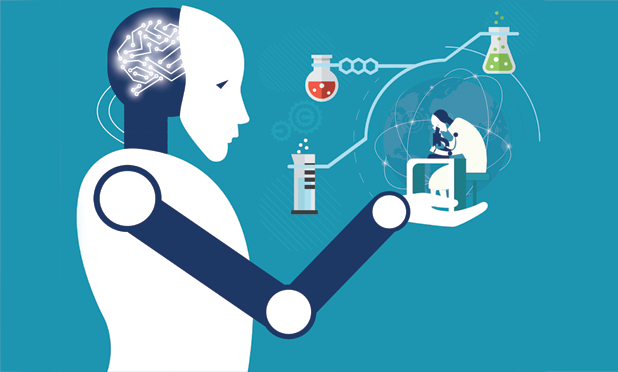
AI changing dynamics of healthcare
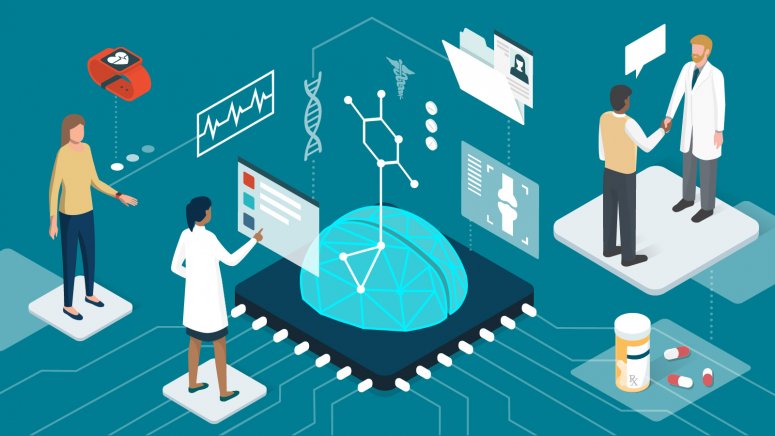
These platforms use algorithms and machine learning to analyse and interpret data, while empowering the healthcare organisation with the means to provide more personalised customer experiences. Understanding people at an individual level means being able to enhance the relationship and identify high value leads. After all, at its core a healthcare provider must deliver effective treatment that improves the quality of life. This is where AI can be used to enhance the quality of data and therefore optimise how people are cared for.
Making sense of it all
As with so many innovations, good, clean, well-organised data is key to success, and poor quality data often represents a challenge. The respondents in an InterSystems survey identified volume and quality of data for training as a barrier and recognised that sufficient data volume and confidence in the data are critical success factors.
Considering how quickly the volume of healthcare data is increasing and the growing complexities of the data sets, it is no wonder that the global AI in healthcare market is expected to top $45 billion by 2026. As more stakeholders in the healthcare value chain start embracing AI (think hospitals, pharmaceutical companies, biotechnology providers, and so on), the sector is one that is perfectly positioned to highlight the benefits this automated way of dealing with data can bring.
A heightened focus on quality data and models that can be used by both developers and data scientists enable healthcare organisations to accelerate and leverage the true power of AI. This means that those who want to take leadership roles in the industry must now invest in their data quality and push for clean, harmonised data to implement and get the most out of their AI tools.
In practice
Some of the use cases of AI in the healthcare industry range from improving data quality, reading images to assist in diagnosis, and early identification of hospital acquired infections. And in developing markets like Africa, the advantages of being able to leverage AI take on an entirely new meaning.
In rural areas, the technology can be used to help patients book appointments by creating personal calendars for doctors and their aides. This mitigates against the risk of no-show appointments given the geographic and economic constraints of getting to a clinic or a consultation room. For their part, doctors can collaborate and exchange information concerning medical questions.
It all comes down to a willingness to adapt to the change that technology innovations enable and for healthcare organisations to embrace AI throughout the value chain. It is something that can greatly enhance data and its analysis. Ultimately, patients will be the ones that benefit the most given the inevitable improvements in the care provided to them.